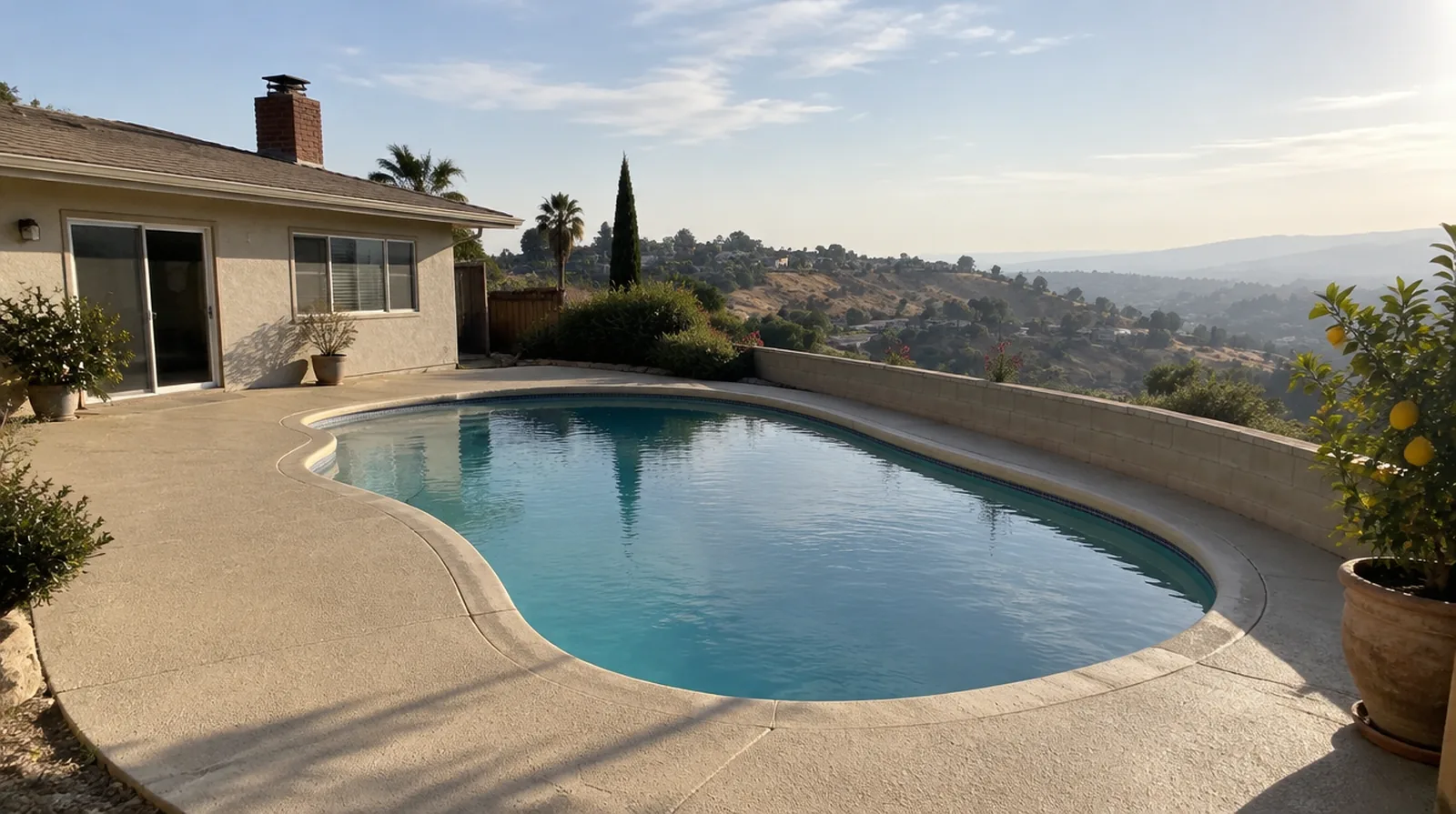
Sun, wind and shaking ground
Whittier has a Mediterranean climate: dry, hot summers, mild winters and very little rain, most of it in a handful of winter storms. That means strong sun almost year-round, which fades paint and bakes plain concrete until it is too hot to walk on. In fall, Santa Ana winds blow dust, leaves and grit across the yard and into the pool, scuffing a decking that is already worn.
The ground matters too. Whittier sits near the Puente Hills and the Whittier fault, and the town felt the 1987 Whittier Narrows earthquake. Decks here often have hairline cracks that follow old movement. Our job is to repair them properly and use a coating that has some flexibility, rather than paint over them and wait for them to show through.
Whittier pools and the decks around them
- Hillside and view-lot homes in the hills above Uptown have decks poured on slopes, with retaining walls and drainage that can send runoff across the concrete.
- Mid-century neighborhoods around Uptown Whittier and the older tracts have pools that may be fifty years old, with decks that have been patched, painted or resurfaced more than once.
- Newer infill and rebuilt homes often have plain broom-finish decks that look flat and stain easily.
- Homes in Friendly Hills and other established areas can have larger yards with spas, built-in barbecues and covered patios attached to the deck.
What we put on the deck
Pool decks are a different job from a garage floor. They need grip when wet, resistance to chlorine and sunscreen, and a finish that does not trap heat. We use a system built in layers.
Prep. We grind the concrete to open the surface, remove old paint and sealer and clean around the coping and tile. Oily patches near the barbecue are degreased.
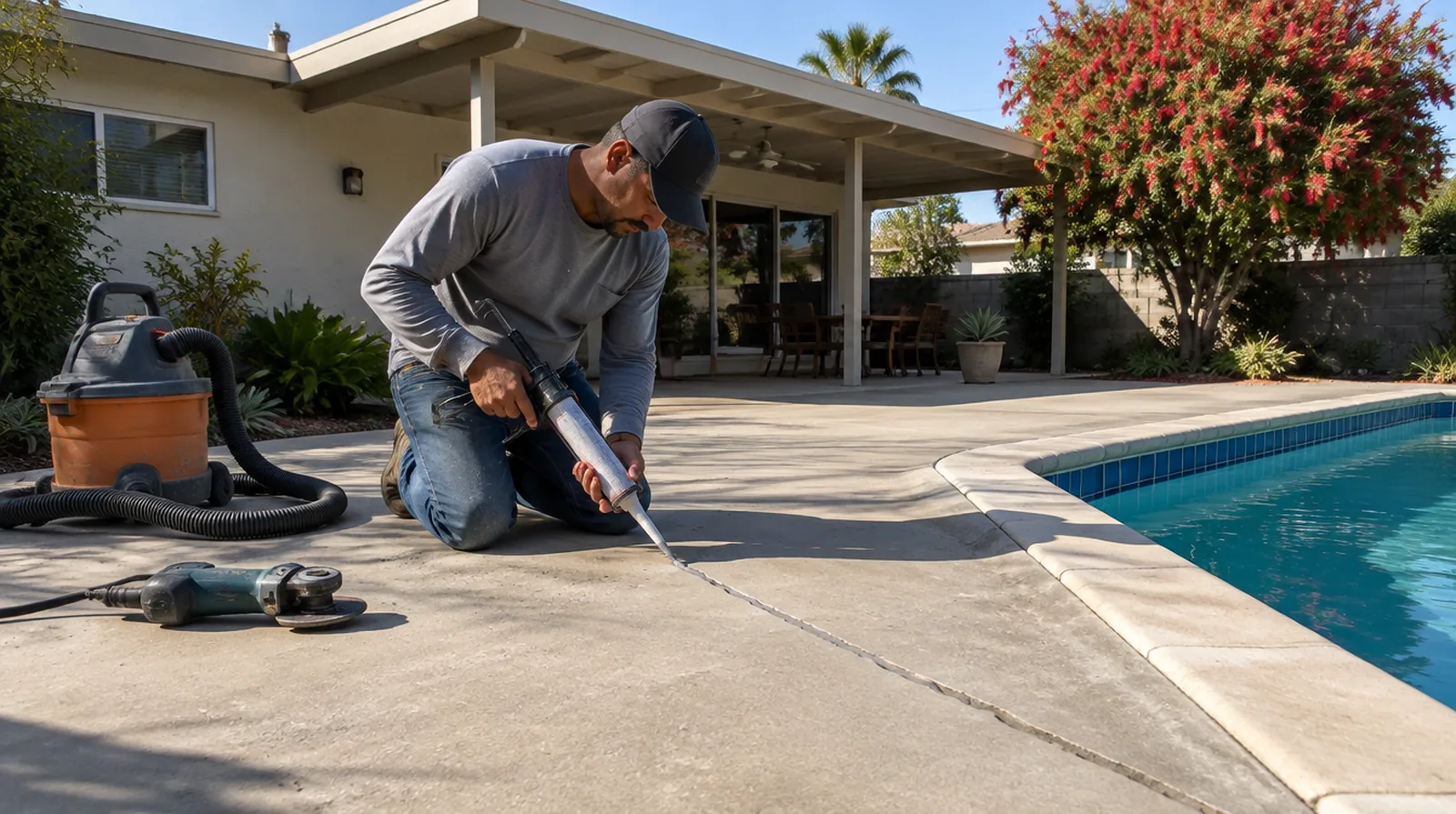
Repairs. Cracks are routed and filled with a flexible material, spalled spots are patched level and expansion joints get fresh sealant.
Texture and color. A sprayed or troweled texture gives grip, and lighter colors reflect more sun. In Whittier's heat, light sand, tan and soft gray colors are usually the most comfortable underfoot.
Seal. A UV-stable topcoat locks it in and resists chlorine, salt and sunscreen.
Picking a finish for your yard
Pale colors keep the deck cooler but show leaf stains from nearby jacaranda, ficus and eucalyptus. Mid-tone tans and warm grays hide dust and organic stains better. A heavier texture gives better grip around steps and spa edges, and a lighter texture is gentler on bare feet and easier to clean. We bring samples so you can look at them outdoors in your own light.
If the deck connects to a patio or walkway, we can carry the same finish across the whole area. For the driveway or front walk, ask about our driveway coating, and for plain interior slabs, our concrete sealing options are simpler.
When to schedule
Southern California allows work nearly all year, which is a big advantage. Spring and fall are ideal, and in summer we start early and stop when the surface gets hot, because coatings applied on hot concrete can bubble. Rain is the main thing that stops a job, so winter work is planned around the forecast. Most decks take three to four days, and you can walk on the deck after a day.
Care and maintenance
Rinse the deck weekly and sweep up leaves, especially during Santa Ana wind season. Wash stains with a mild cleaner and avoid harsh acid washes. Keep planters and furniture on pads, and plan a fresh topcoat every few years in full sun. If you ever drain the pool, call us first so we can check the deck edges.
Common questions
Do we have to drain the pool? No, we cover it and work around it.
Will it be hot in summer? Lighter colors stay noticeably cooler than bare concrete or dark paint.
Do you work in nearby cities? Yes, including La Habra, Norwalk, Santa Fe Springs, Pico Rivera and Hacienda Heights.
Cool down your deck before summer
Call (562) 457-6982. We will check the concrete, show you finish samples and write up a clear price.