A city of many eras
Whittier was founded by Quakers in 1887, and the oldest neighborhoods around Uptown and Whittier College still have Craftsman bungalows and Spanish Revival homes. After World War II, tracts of single-story ranch houses spread east and south, and later homes climbed into the hills. The 1987 Whittier Narrows earthquake damaged many older buildings, and plenty of houses were patched and updated in the years after. That mix means we see every kind of counter: original tile, laminate from the 1970s, cultured marble and the occasional butcher block.
An epoxy resurface works on most of them. We use the existing counter as the base and build a new surface on top, which keeps the cabinets, the sink and the backsplash in place.
When epoxy is a good choice, and when it is not
Resurfacing makes the most sense when the cabinets are sound and you want a fresh, durable surface at a fraction of the cost of quartz or granite. It is a strong fit for rental units, ADUs, laundry rooms, garage bars and bathrooms with a cracked vanity.
It is not the right move for every counter. Some owners of historic homes want to keep original 1920s or 1930s tile because it is part of the house's character. We will say so if we think the original is worth saving. And if the base under the counter is rotted from an old leak, it needs to be replaced before any coating goes on.
Prep makes the finish
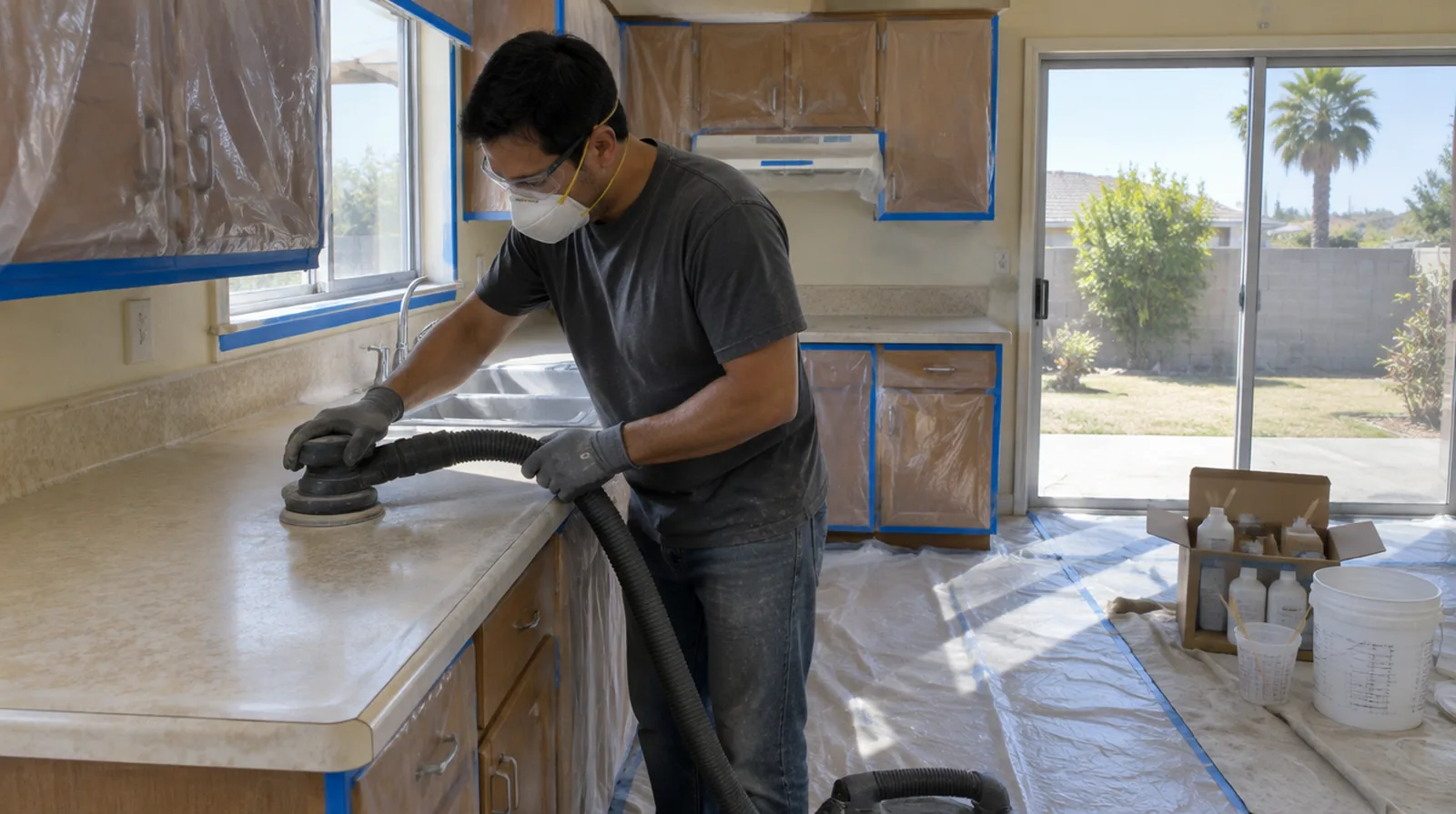
Most of the work happens before the color goes on. We protect the room with plastic, degrease the counter and sand it so the primer bonds. Tile gets its grout lines filled and leveled. Chips, burns and lifted seams are repaired. Backsplashes can be coated to match or masked off and left as they are. Skipping any of this is why some DIY kits peel within a year.
Designs we pour
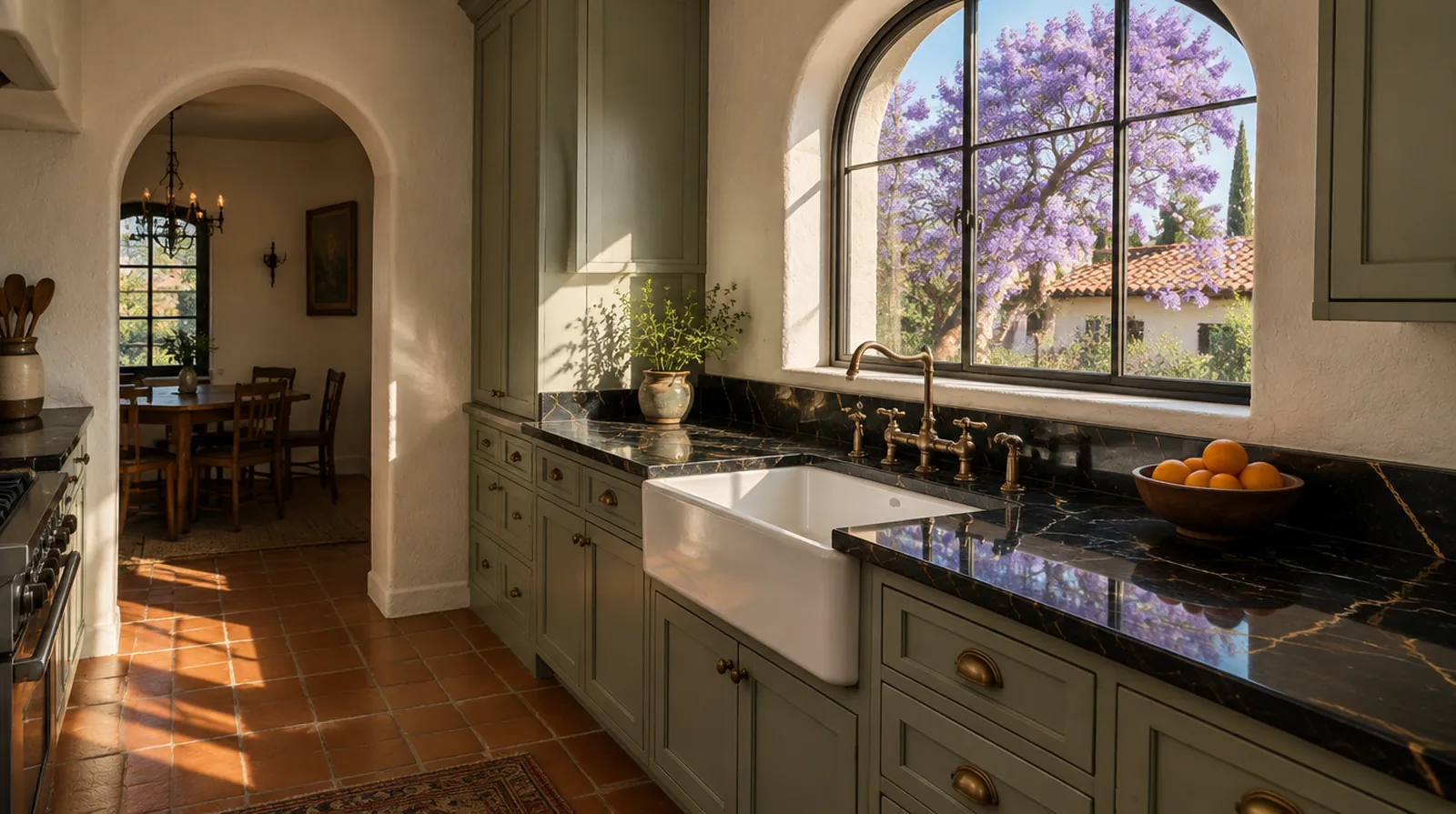
Bold black or charcoal with gold veining looks right in a Spanish Revival kitchen with plaster walls and dark wood. White marble styles open up the smaller galley kitchens in many ranch homes. Soft grays suit modern remodels in the hills. For a backyard bar or a man cave, metallic finishes in bronze, copper or pearl add depth. You approve the colors from samples held up in your own kitchen.
Schedule and cure
A typical kitchen takes two to three days: prep and primer, then the color coat, then a clear top coat. Light use can start about a day after the last coat, with full hardness after about seven days. Expect some odor during the work. We seal off the area and ventilate to the outdoors.
Whittier's warm, dry weather is usually easy on the cure. On hot summer afternoons, though, a closed-up kitchen can get warm enough to shorten working time, so we start early and ask that the air conditioning stay on.
Sun, heat and everyday care
Southern California sun is strong. Light-colored epoxy in direct sunlight can slowly yellow over many years, which is why we finish counters near west-facing windows with a UV-resistant top coat. Indoors, clean with warm water and dish soap, use a cutting board and set hot pans on a trivet. Avoid harsh scouring products. Light scratches buff out, and the whole surface can be recoated in the future.
Questions from Whittier homeowners
How much does it cost?
Price depends on square footage, the number of edges and cutouts, repairs, and the design. It is generally much less than new stone and avoids the cost of removing the old counter.
Where else do you work?
Throughout Whittier, plus La Habra Heights, Pico Rivera, Santa Fe Springs, La Mirada and Hacienda Heights. For floors, see garage floor epoxy and metallic epoxy flooring.
Thinking about new counters?
Call (562) 457-6982. We will see the kitchen, bring samples and give you a clear written quote.