Common problems
Peeling over old slabs, cracks telegraphing through, worn areas and stains.
Fix
Assess, remove, repair slab and recoat.
Can you fix cracks in my coating?
Yes, by repairing the slab crack below.
Partial repair?
Sometimes.
Coatings on old slabs
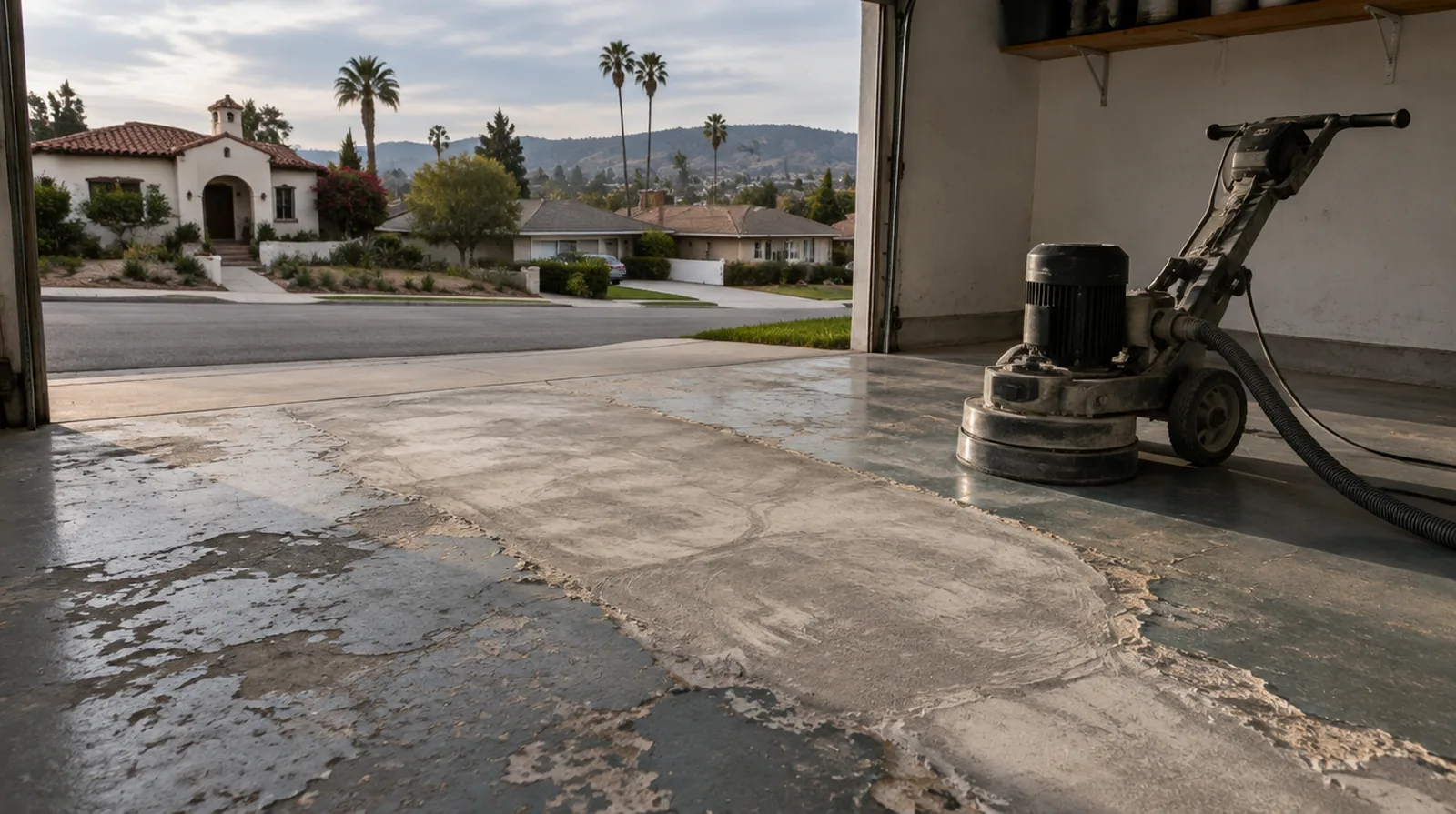
Old slabs move and absorb moisture differently than new ones. Coatings that were rolled on without grinding often peel. We remove them and rebuild the floor properly.
Restaurant floors
Worn kitchen floors get repaired overnight so the restaurant reopens on time.
Uneven settling
Old slabs that have settled unevenly can crack coatings. We grind and patch to correct the surface before recoating.
Epoxy floor repair on aging Whittier slabs
Coatings fail in this city for a few predictable reasons: older concrete that was never ground, moisture rising through slabs without a vapor barrier, and settling on hillside lots. Epoxy floor repair in Whittier begins by sorting out which of those applies, because each needs a different fix.
Why does my coating crack along a line across the garage?
That usually traces a crack or joint in the slab beneath. We open and fill the crack, then recoat. If the slab is still moving, some telegraphing may return, and we explain that honestly.
Can a floor coated by a previous owner be saved?
Sometimes. We test adhesion across the room. If most of it is bonded, a repair and fresh topcoat works. If it lifts easily in many spots, removal is the better path.
Can settling on a hillside lot be corrected?
We can fill low areas and smooth transitions, but major structural movement needs a foundation specialist first.
Do you repair restaurant floors in Uptown?
Yes, often overnight, using fast-cure materials suited to kitchens.
Choosing between a patch and a full redo
When most of the coating is bonded and only a few areas are damaged, a patch is the sensible fix. We grind out each spot, feather the edges, fill and recoat with matching chips or color. On older floors that have yellowed, a clear coat over the whole room helps everything blend. When testing shows weak bonding across much of the floor, we recommend removing it and starting fresh with proper grinding and a primer suited to the slab's moisture. That costs more at first but avoids a cycle of patches. We write up both options so you can compare.
Moisture in slabs without a barrier
Many older Whittier homes were built without a vapor barrier under the slab. Moisture coming up can push off coatings over time. A moisture-tolerant primer helps a lot.
Tree root heave
Old trees can lift a garage slab edge. We grind the lip smooth before recoating.
When an old garage coating has worn out
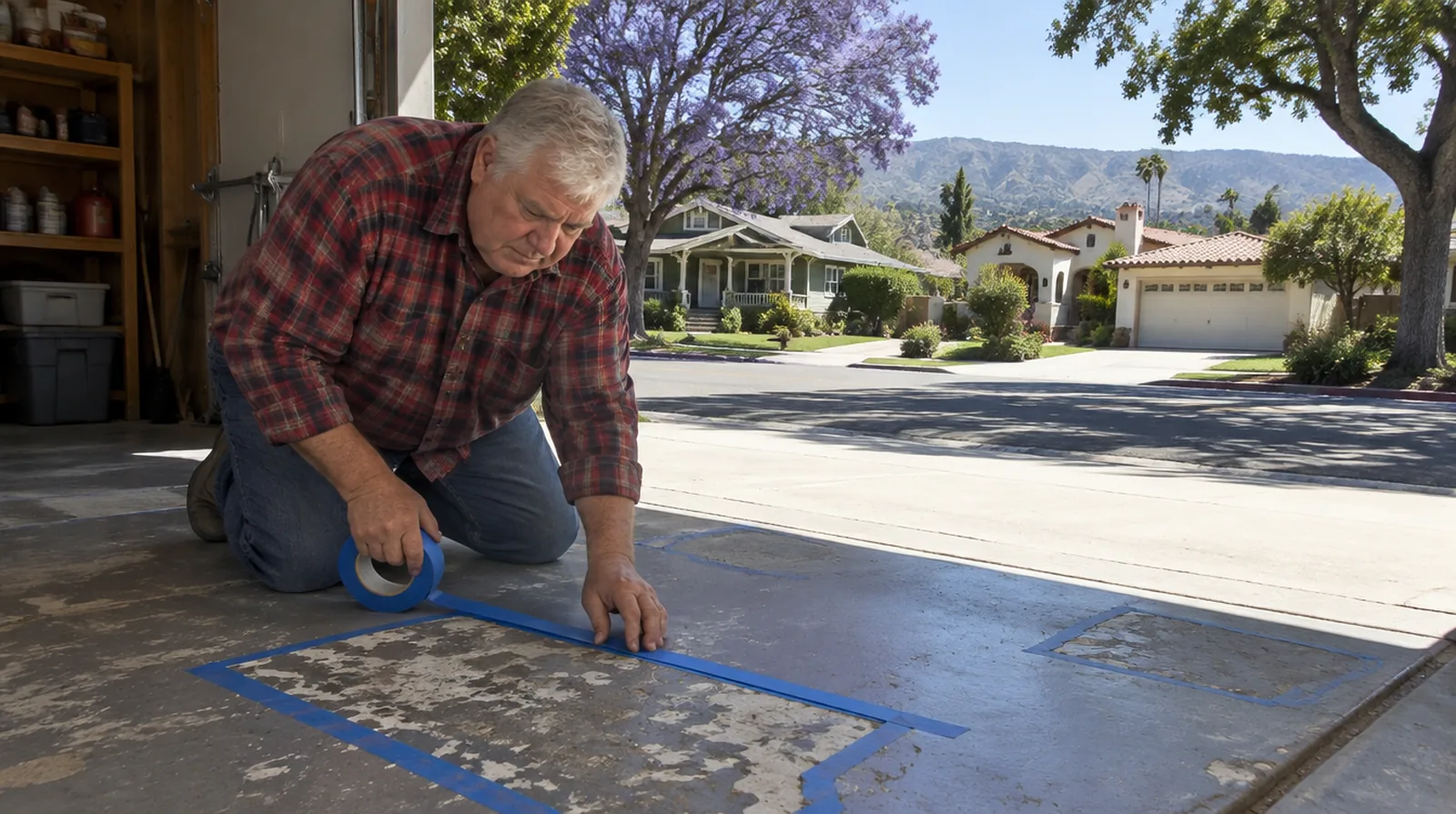
Many Whittier garages have a coating that was put down years ago, sometimes by a previous owner. Over time, it can wear thin, peel or lose its color.
Signs of wear
Look for dull areas, peeling at the edges, worn paths where cars park and spots where bare concrete shows through.
Finding the cause
Wear can come from a thin original coat, poor prep, moisture or heavy use. We look at the floor to find the likely cause.
Repair or redo
If wear is limited, we can grind and recoat those areas. If peeling is widespread, removing the old coating and starting fresh is usually the better path.
Matching color
An exact match with an old coating can be hard. A full topcoat over the whole floor can help blend repairs.
Prevent future wear
A durable topcoat and good care help a new coating last.
Send photos
Photos help us give initial advice before a visit.
Next steps
Call or use the form to set up a repair visit.
Checking for moisture
Older slabs in Whittier often lack a vapor barrier underneath. Moisture rising through the concrete can push a coating loose over time. We take readings before recommending a repair so the new work does not fail for the same reason the old coating did. If readings are high, we explain what that means and the options for a system made for damp slabs.
Get a repair estimate
Call (562) 457-6982.