Why Whittier driveways wear out
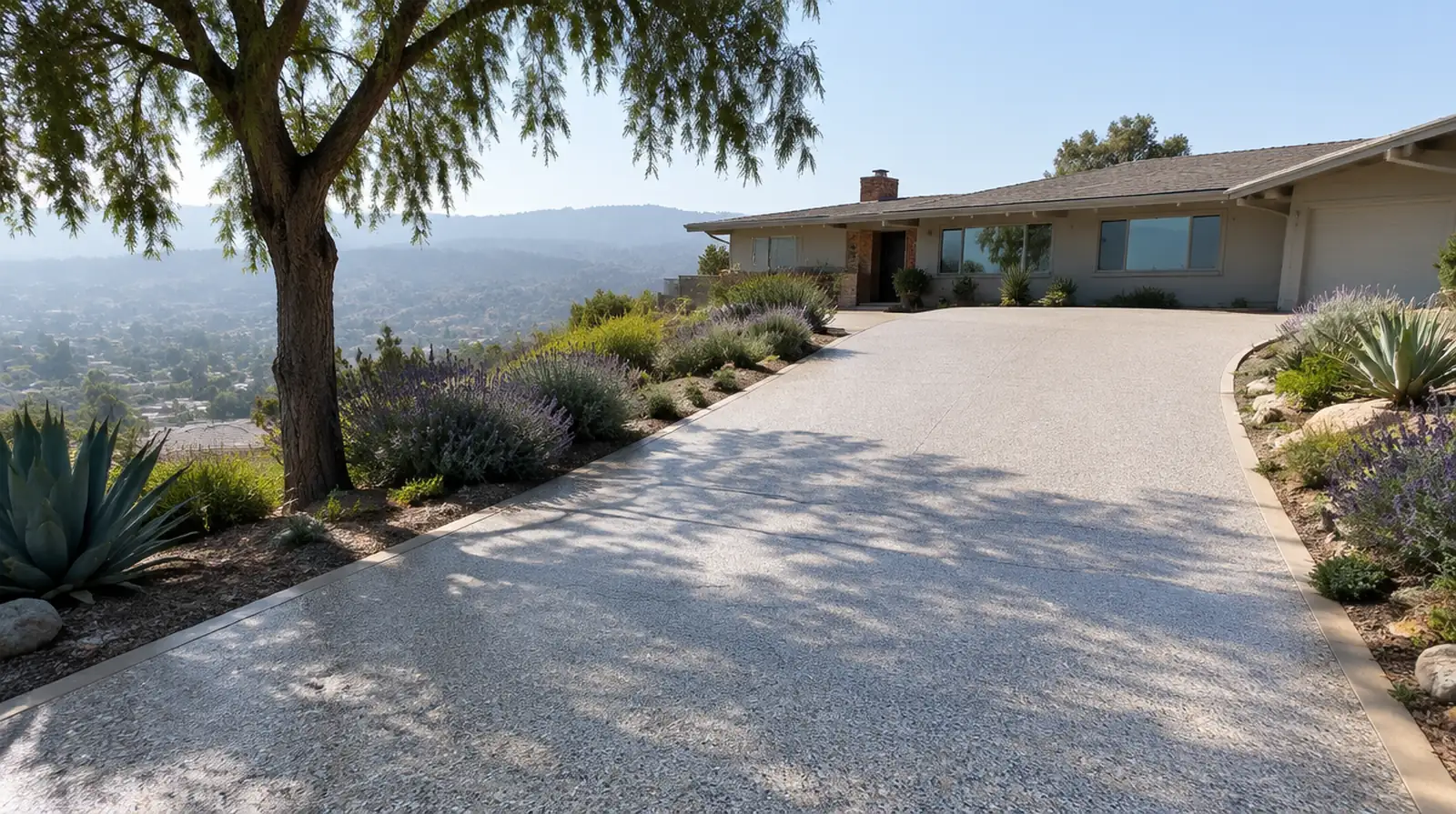
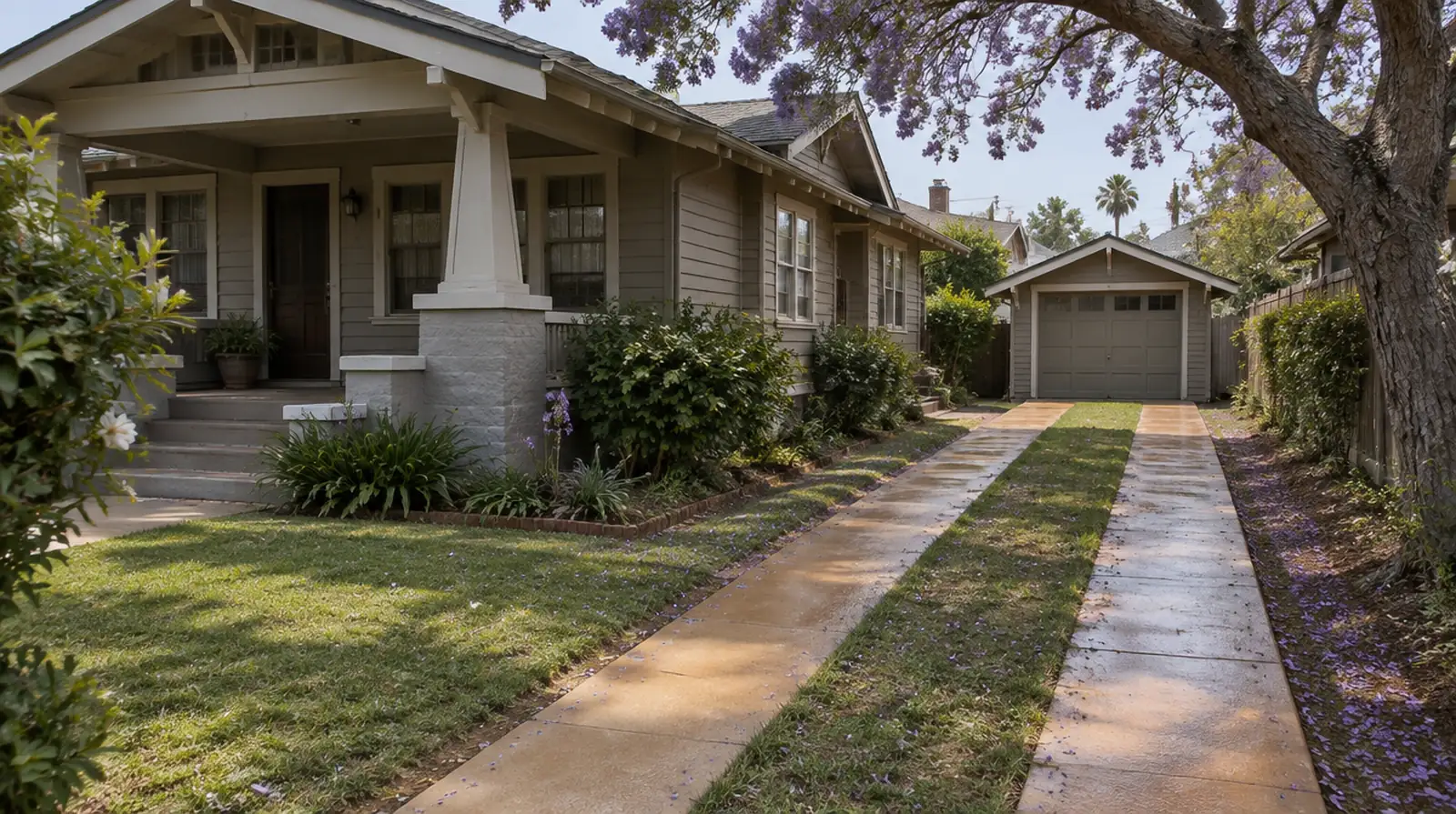
Most driveway concrete in Whittier was poured decades ago. Homes near Uptown and in the older tracts were built from the 1910s through the 1950s, and many still have their original drives, sometimes as two narrow ribbons with grass between. Hillside neighborhoods like Friendly Hills were mostly built in the 1950s and 1960s, with steeper driveways that see a lot of tire scuffing and oil drips at the bottom of the slope.
The local conditions are hard on bare concrete. Summer afternoons regularly push into the 90s, and dark oil stains get baked in. Mature trees, from jacarandas and pepper trees to big ficus, drop sap and stain, and their roots push up slabs. Some neighborhoods have clay soil that swells in wet winters and shrinks in dry summers, opening cracks and joints. Many of the older homes also came through the 1987 Whittier Narrows earthquake with hairline cracks that have slowly grown.
Sun changes everything outdoors
Standard epoxy is excellent inside a garage, but it is the wrong choice for a driveway in open sun. UV light breaks it down, turns it amber and chalky, and eventually lets it peel. For Whittier driveways we use systems designed to stay outside:
- Polyaspartic flake systems. A UV-stable coating with decorative flake broadcast into it, finished with a clear topcoat and grip aggregate. Best for a full makeover and for heavy oil drip zones.
- Penetrating sealers. For good-looking concrete that just needs protection from stains and water, a breathable sealer soaks in without changing the look.
- Tinted semi-transparent sealers. These even out patchy color on older concrete and work well on ribbon drives and walkways around bungalows, where a heavy coating would look out of place.
Prep decides how long it lasts
A driveway coating fails at the bond, and the bond comes down to preparation. We start by testing whether the slab has been sealed before, since old sealers block new coatings. Then we degrease oil spots, grind or shot-blast the surface to open the pores, and route out cracks before filling them with flexible filler. Joints are kept as joints, so the slab can still move without cracking through the new finish. Heaved sections from tree roots can be ground down to reduce trip edges, but a slab that has lifted badly may need to be replaced before it is worth coating.
On steep drives, grip matters as much as looks. Rain is rare in Whittier, but when the first winter storm hits, oil residue rises and a smooth finish can get slick. We broadcast a fine aggregate into the topcoat and add more texture on slopes and at the street apron.
Picking a color
Lighter colors stay noticeably cooler underfoot and hide dust, which matters here in late summer and during Santa Ana wind events that coat everything in fine grit. Warm tans and grays match the stucco and tile on Spanish revival homes; cooler grays and charcoal blends suit mid-century ranch houses. We bring samples to the house so you see them in your own light.
Timing and curing
Most driveways take one or two days. The polyaspartic systems we use cure quickly, so you can usually walk on the surface the same evening and drive on it within a day or two, depending on temperature. We schedule around very hot afternoons, since coating hot concrete in full sun can cause bubbles, and we start early on summer jobs.
Keeping it looking new
A coated driveway is easy to care for. Hose it off when the dust builds up, and wipe up oil drips when you see them instead of letting them sit for weeks. A soft push broom and a mild cleaner handle most dirt. Avoid harsh solvents and do not let a pressure washer tip sit close to one spot. Under trees that drop sap or berries, a quick rinse every few weeks keeps stains from setting. Sealer-only finishes should be recoated every few years; the full flake systems last much longer before they need a fresh topcoat.
Common questions
Will the coating hide every crack? Filled cracks are smoother and sealed against water, but they can still show as faint lines. Cracks that are still moving may reopen.
Can you coat the walkway and front steps too? Yes. Matching the drive, walk and porch steps ties the front of the house together.
Do you work nearby? Yes, including La Habra, Pico Rivera, Santa Fe Springs, Hacienda Heights and La Mirada.
See what your driveway could look like
Call (562) 457-6982 and we will look at the concrete, test the old surface and give you a written price.