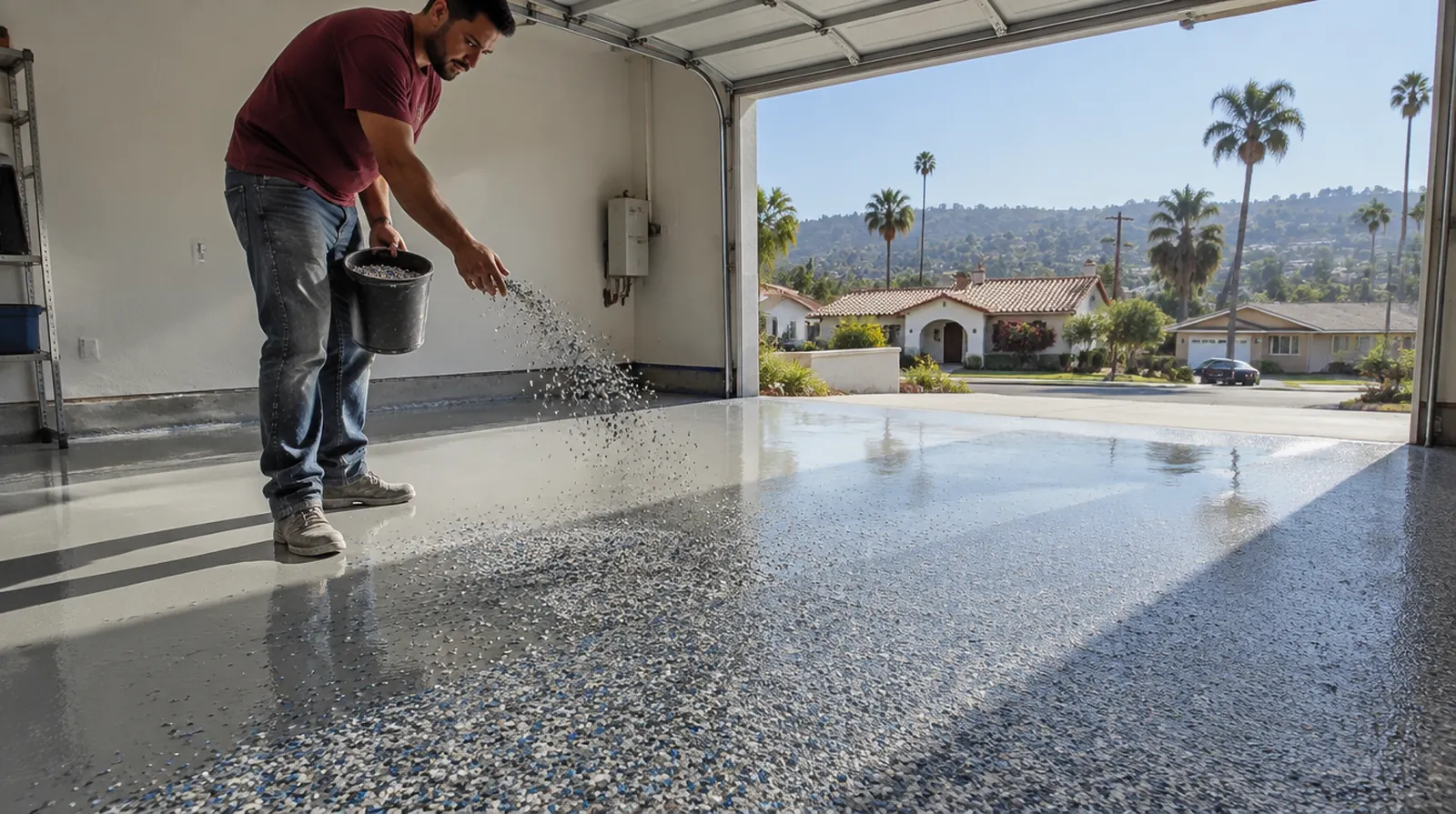
Hiding imperfections
Repaired cracks and patched spalls vanish under a full chip broadcast.
Colors for historic homes
Warm browns, tans and muted greens complement Craftsman homes; grays suit modern ones.
Install
Grind, repair, base, chips, scrape, topcoat.
Will repairs show?
Rarely under chips.
Easy to clean?
Yes.
Workshops
Detached garages often serve as woodworking or hobby shops. Flake floors make sawdust easy to sweep up.
Chip size
Smaller chips give a finer, granite-like look; larger chips give a bolder pattern. On a rough old slab, larger chips hide more.
Warm tones
Craftsman homeowners often go with cinnamon and mocha blends that echo wood trim.
Epoxy flake flooring that respects an older garage
Garages behind period homes in Whittier often have uneven slabs, old patches and paint drips from years of projects. Epoxy flake flooring in Whittier is forgiving on those floors because the chips break up the surface and hide small dips and color changes. We still grind and repair carefully, but the result looks tidy even when the concrete underneath has a long history.
Can the flake color echo a brick or stone foundation?
Yes. Rust, terracotta and warm gray chips can tie the floor to brick foundations and garden walls nearby. We mix custom blends when stock ones do not quite match.
Will the floor look out of place in a carriage-house style garage?
A satin topcoat over earthy chips looks understated rather than showroom shiny. Many owners prefer that in older buildings.
Is flake a good choice for a potting room or garden shed?
It handles soil, water and dropped pots well and cleans with a hose and broom.
How large should the chips be?
Smaller chips give a quieter look suited to period homes, while larger ones feel bolder in a workshop.
What install week looks like
Day one is about the slab. We grind away paint and old sealers, open and fill cracks and patch chipped edges. Once the surface is clean and sound, the tinted base goes down and chips are broadcast by hand until the base disappears. Day two we scrape loose chips, vacuum thoroughly and roll the clear top. Weather in Whittier is usually kind to coatings, but on very hot days we start early so the material has time to flow. You get written guidance for walking, returning shelves and parking.
Living with a flake floor
Sweep leaves and grit, rinse mud from the garden and mop with a mild soap. That is all most garages need. A flake floor also hides small scuffs, so it keeps looking neat between cleanings.
Cure in mild weather
Whittier's mild days help coatings cure evenly and on schedule.
A flake floor for a classic car or vintage truck
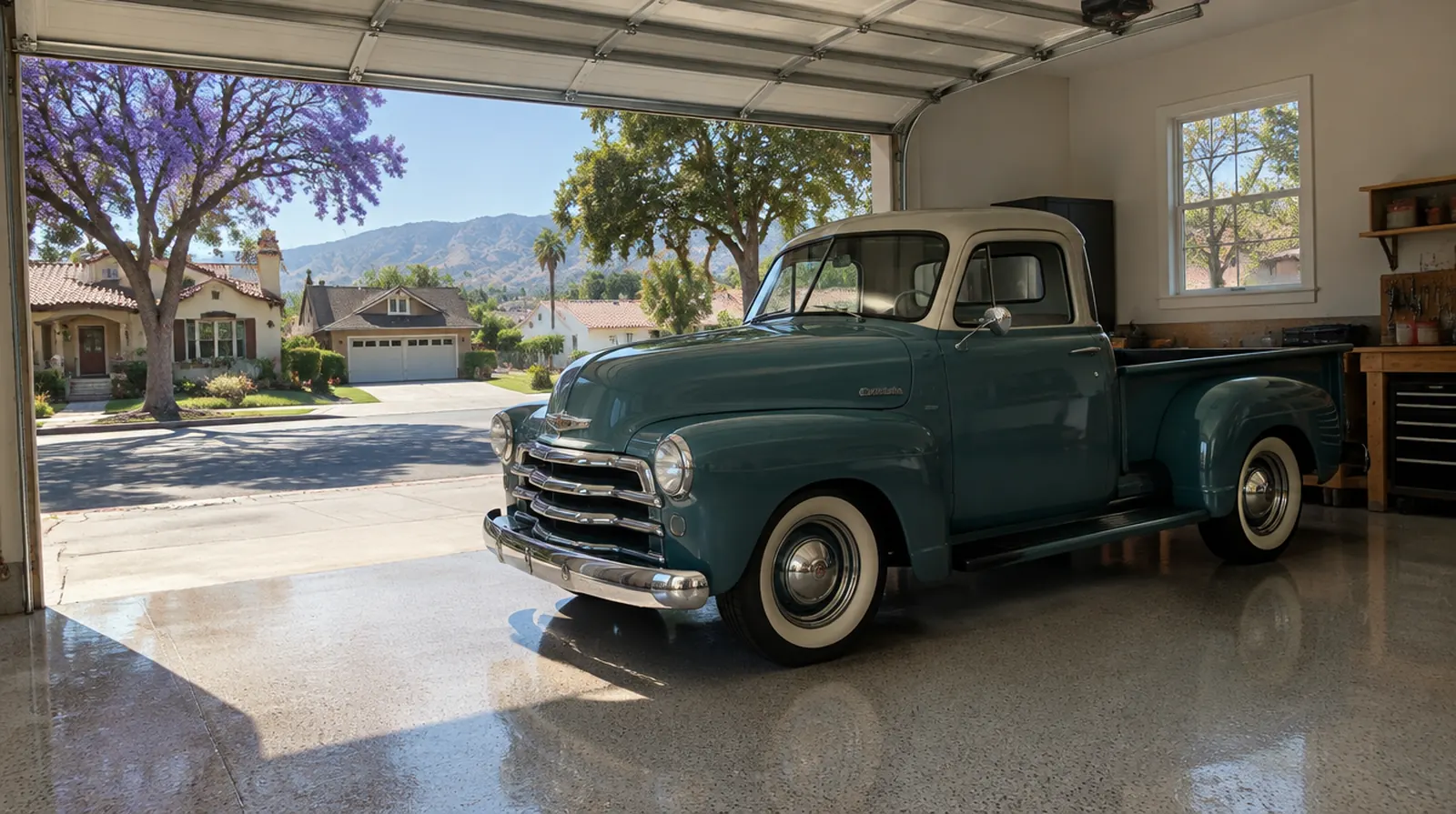
Whittier has plenty of car fans, and many of them keep an older truck or classic car in the garage. A flake floor gives that vehicle a clean place to sit and makes working on it easier.
Drips and leaks
Older vehicles tend to leak a little oil or coolant. On bare concrete, those drips soak in and leave stains. On a sealed flake floor, they sit on top and wipe up with a rag.
Jack stands and creepers
Jack stands concentrate weight on small points. A thick base coat with a hard topcoat handles them well. Placing a piece of plywood under stands adds protection. Creepers roll smoothly over a coated floor.
Choosing a blend
Classic car owners often pick a gray and black blend, or something that echoes the car's paint. We can bring samples to hold up next to the vehicle.
Lighting the showroom feel
A lighter blend reflects more light, helping you see under the hood and around the car. Pair it with bright overhead fixtures.
Wheel chocks and tire marks
We recommend letting tires cool before parking on a new floor, especially after a drive on a hot day. A durable topcoat helps resist hot tire marks.
Workbench zone
If you have a workbench, the area in front of it sees dropped tools and parts. A flake floor hides small chips and scuffs.
Car shows and storage
If your car goes out for shows, a clean floor makes the garage feel finished when it returns.
Choose your blend
Call (562) 457-6982.